

Introduction
Rodolphe Saadé and Greg Hayes are two prominent business leaders whose careers highlight the importance of strategic decision-making, international operations, and long-term business planning. Although they work in different industries, both have held influential positions in major companies and helped guide organizations through changing economic conditions. Their professional journeys offer useful insights into leadership, corporate growth, and the challenges of managing large businesses.
Rodolphe Saadé is best known for his leadership at the CMA CGM Group, a major international shipping and logistics company. Under his leadership, the business has continued to develop its global transportation network and expand its presence in logistics, shipping, and related services. His work reflects the importance of international trade and the systems that connect manufacturers, suppliers, retailers, and consumers around the world.
Greg Hayes, meanwhile, is widely recognized for his former leadership of RTX Corporation, previously known as Raytheon Technologies, and its predecessor company, United Technologies Corporation. His career has been closely associated with aerospace, defense, industrial operations, and corporate restructuring. His experience demonstrates how executives must balance innovation, operational efficiency, customer expectations, and long-term investment.
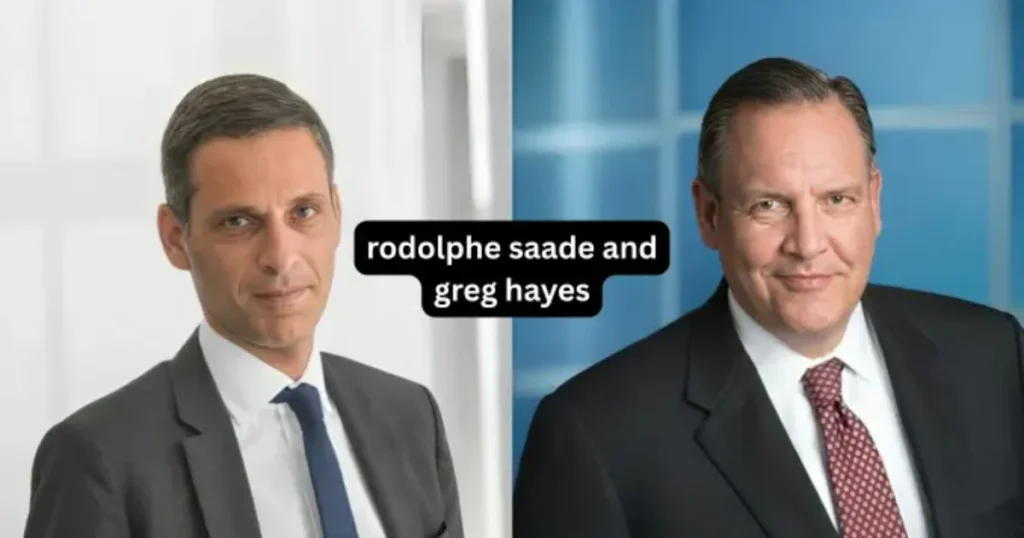
Interest in rodolphe saade and greg hayes comes from the opportunity to compare two executives who have influenced large international businesses in different ways. Their careers are not identical, and they are not primarily known as business partners. Instead, examining their professional backgrounds provides a broader understanding of modern corporate leadership.
This article explores their backgrounds, leadership approaches, business achievements, industries, and professional significance. It also explains the key differences between their careers and the lessons readers can take from their experiences.
Who Is Rodolphe Saadé?
Early Background and Professional Journey
Rodolphe Saadé is a French-Lebanese business executive associated with the development and international growth of the CMA CGM Group. The company was founded by his father, Jacques Saadé, in 1978 and grew from a shipping business into a major global transportation and logistics organization. Rodolphe Saadé became increasingly involved in the company’s operations before assuming its top leadership role.
His career developed within an industry that depends on international trade, complex supply chains, and extensive transportation networks. Shipping companies must coordinate vessels, ports, containers, warehouses, and land transportation while responding to changing customer demand. Managing these operations requires commercial awareness, financial discipline, and the ability to make decisions across different markets.
Rodolphe Saadé became chairman and chief executive officer of CMA CGM in 2017, following his father’s death. His appointment marked an important transition for the family-controlled business. He inherited an established international organization while also facing the challenge of preparing it for future changes in global commerce.
CMA CGM and Its Global Business
CMA CGM operates in container shipping, logistics, and related transportation services. Its operations help businesses move goods between countries, making the company an important participant in global supply chains. Customers include companies that need reliable transportation for manufactured products, consumer goods, industrial materials, and other commercial shipments.
Under Rodolphe Saadé’s leadership, CMA CGM has pursued expansion beyond traditional maritime shipping. Its broader business interests include logistics services, freight transportation, and media investments. This diversification reflects an effort to build a more extensive business ecosystem around international trade and communication.
The company also operates in a highly competitive environment. Shipping businesses face fluctuating freight rates, changing fuel costs, port congestion, geopolitical uncertainty, and environmental regulations. These pressures make long-term planning essential, particularly when purchasing vessels or investing in infrastructure requires substantial capital.
Saadé’s leadership is therefore closely associated with managing a business that connects many parts of the global economy. His responsibilities extend beyond moving cargo from one port to another; they include overseeing a complex international organization and deciding how it should adapt to future commercial demands.
Who Is Greg Hayes?
Education and Career Development
Gregory J. Hayes, commonly known as Greg Hayes, is an American business executive with extensive experience in aerospace, defense, finance, and industrial management. He studied economics at Purdue University and became a certified public accountant. His financial background helped him develop expertise in corporate planning, budgeting, business performance, and organizational strategy.
Hayes joined United Technologies Corporation (UTC) in 1999 through its merger with Sundstrand Corporation. Over the following years, he held several senior positions, gaining experience in financial management and corporate decision-making. His career progression demonstrates how technical knowledge and financial expertise can prepare executives for the challenges of leading large organizations.
From 2008 to 2014, Hayes served as UTC’s chief financial officer. In this role, he was involved in managing the company’s finances and supporting major business decisions. He became chief executive officer in 2014 and chairman in 2016, giving him responsibility for overseeing the company’s strategic direction and long-term development.
His leadership career later became closely associated with major changes in the aerospace industry. These included acquisitions, business separations, and the combination of major aerospace and defense operations. Such decisions required coordination among employees, shareholders, customers, regulators, and other stakeholders.
Leadership at United Technologies and RTX
One of Hayes’s most significant achievements was helping reshape UTC into a more focused aerospace business. The company separated Otis, its elevator business, and Carrier, its heating, ventilation, air-conditioning, and refrigeration business, in 2020. These changes allowed the businesses to operate independently while UTC concentrated on its remaining aerospace operations.
In April 2020, UTC combined its remaining aerospace businesses, including Pratt & Whitney and Collins Aerospace, with Raytheon Company. The resulting organization became Raytheon Technologies, which was later renamed RTX Corporation. Hayes led the company as chairman and chief executive officer during its formation and subsequent development.
The combination brought together aircraft engines, aerospace systems, and defense technologies under one corporate structure. The strategy aimed to strengthen the company’s position across multiple areas of aerospace and defense, although mergers of this scale also involve integration challenges, operational risks, and the need to align different corporate cultures.
Hayes stepped down as RTX’s chief executive officer in May 2024 and became executive chairman. In April 2025, he left the executive chairmanship and the company’s board, following a leadership transition to Christopher Calio. His career remains significant because of the organizational changes he led during his time at UTC and RTX.
Rodolphe Saadé and Greg Hayes: Comparing Their Leadership Styles
Different Industries, Similar Responsibilities
The professional connection between Rodolphe Saadé and Greg Hayes is best understood through comparison rather than an assumed personal or business partnership. Saadé leads a shipping and logistics group, while Hayes built his executive career in aerospace and defense. Their industries operate differently, but both require complex planning, substantial investment, and coordination across international markets.
Saadé’s business environment depends heavily on the movement of physical goods. Shipping routes, port capacity, fuel expenses, freight demand, and international trade policies can all affect company performance. A successful executive must understand these factors and make decisions that keep operations reliable while maintaining commercial competitiveness.
Hayes’s career involved a different set of challenges. Aerospace and defense businesses require extensive engineering expertise, manufacturing capabilities, regulatory compliance, and long-term customer relationships. Major corporate transactions also demand careful financial analysis and planning to ensure that different business units can work effectively together.
Both executives have operated in industries where decisions can influence thousands of employees, major suppliers, customers, and investors. Their careers illustrate why leadership in large organizations requires more than making short-term financial decisions. It also involves building systems, developing teams, and preparing companies for changes in demand and technology.
Strategic Thinking and Corporate Growth
Saadé’s leadership has emphasized the expansion of CMA CGM beyond traditional container shipping. Investments in logistics and air freight have helped the group broaden its services and respond to customers seeking more integrated transportation solutions. The strategy reflects an understanding that businesses increasingly need connected supply-chain services rather than isolated shipping arrangements.
Hayes, by contrast, became known for reshaping a large industrial organization. His work at UTC and RTX involved decisions about which businesses should remain together, which should operate independently, and how aerospace and defense operations could be combined. These decisions required a different approach to growth, focusing on corporate structure and the strategic fit between business units.
The comparison between rodolphe saade and greg hayes shows that there is no single formula for corporate expansion. One executive has pursued growth through logistics development and acquisitions within a transportation group, while the other led major restructuring and consolidation in aerospace and defense.
Both approaches involve opportunities and risks. Expansion can create new revenue streams, improve services, and increase market reach, but it can also raise costs and management complexity. Restructuring can simplify a company and sharpen its focus, yet it may require difficult transitions and careful coordination among employees and stakeholders.
Ultimately, effective corporate strategy depends on the needs of the business, the condition of its industry, and the opportunities available. Their experiences provide different examples of how senior executives can respond to these factors.
The Industries They Represent
Shipping, Logistics, and International Trade
The shipping industry plays a central role in the global economy because businesses depend on transportation to deliver products across borders. CMA CGM participates in this system through maritime shipping, logistics, and air freight. Under Saadé’s leadership, the company has worked to offer a broader range of services to customers with increasingly complex transportation needs.
Logistics companies must respond to changing consumer demand, international regulations, environmental expectations, and unexpected supply-chain disruptions. They also need to invest in technology that helps track shipments, manage inventory, and coordinate deliveries. These challenges make operational planning and adaptability important qualities for industry leaders.
Saadé’s position places him at the intersection of international commerce and transportation infrastructure. Decisions involving shipping capacity, logistics facilities, and digital systems can affect how efficiently goods move between producers and consumers.
Aerospace, Defense, and Advanced Technology
The aerospace and defense industry operates through long-term engineering projects, complex manufacturing processes, and demanding safety standards. RTX’s businesses include aircraft engines through Pratt & Whitney, aerospace systems through Collins Aerospace, and defense technologies through Raytheon.
Hayes’s career involved managing businesses that serve commercial aviation, government customers, and other organizations requiring advanced technology. These markets depend on research, engineering investment, manufacturing quality, and reliable customer support.
His leadership during the formation of RTX demonstrated the scale of organizational change possible in this industry. Combining businesses can bring together expertise and resources, but executives must also manage integration, costs, production requirements, and customer commitments.
The comparison between rodolphe saade and greg hayes therefore highlights two different ways businesses support the global economy. Shipping and logistics help move goods around the world, while aerospace and defense companies develop technologies that support aviation, transportation, and national security.
Major Challenges and Business Responsibilities
Economic Uncertainty and Competition
Both executives have worked in industries exposed to changing economic conditions. Shipping companies may experience sudden changes in freight rates, fuel prices, and global trade volumes. Aerospace companies face different pressures, including production schedules, research costs, government contracts, and changes in commercial aviation demand.
These conditions make financial planning particularly important. Companies must decide how much to invest, where to expand, and how to maintain operations when market conditions change. Poorly timed decisions can create financial pressure, while flexible strategies may help organizations respond more effectively.
Competition adds another layer of complexity. Companies must offer dependable services, control costs, invest in innovation, and maintain strong customer relationships. Leadership requires balancing these priorities without losing sight of long-term goals.
Technology and Environmental Responsibility
Technology continues to influence both industries. In logistics, digital platforms and data systems can improve shipment visibility and operational planning. In aerospace, engineering advances can support aircraft performance, manufacturing efficiency, and new technical capabilities.
Environmental responsibility is also increasingly important. Shipping companies face pressure to reduce emissions and improve fuel efficiency, while aerospace businesses must work on technologies and processes that address environmental impacts. Progress often requires significant investment and long development periods.
Executives must evaluate these opportunities realistically. New technology can improve competitiveness, but implementation requires funding, skilled employees, and effective oversight. Their professional experiences demonstrate the importance of preparing established businesses for changing expectations while maintaining reliable operations.
What Can Readers Learn From Their Careers?
The careers of these executives offer several useful lessons for students, entrepreneurs, and professionals interested in business leadership.
First, industry knowledge matters. Leaders need to understand how their businesses work, what customers expect, and which external factors influence performance. General management skills are valuable, but they become more effective when combined with a strong understanding of the industry.
Second, long-term strategy requires adaptability. Companies cannot rely entirely on past success. They must evaluate changing markets, identify new opportunities, and reconsider existing business models when circumstances demand it.
Third, major decisions involve trade-offs. Acquisitions, restructuring, and expansion can offer important advantages, but they also introduce costs and uncertainty. Successful decision-making requires evaluating potential benefits alongside risks.
Finally, leadership involves responsibility. Large companies affect employees, customers, suppliers, communities, and investors. Their leaders must consider operational performance alongside safety, accountability, and long-term sustainability.
The experiences of Saadé and Hayes offer different examples of these principles in practice. Their careers show that business leadership is not simply about holding an executive title; it is about making informed decisions and guiding organizations through complex situations.
Frequently Asked Questions
1. Who is Rodolphe Saadé?
Rodolphe Saadé is a French-Lebanese business executive who serves as chairman and chief executive officer of the CMA CGM Group. He has led the company’s development across shipping, logistics, and related transportation services since 2017.
2. Who is Greg Hayes?
Greg Hayes is an American business executive known for his leadership of United Technologies Corporation and RTX Corporation. He served as RTX’s chief executive officer until 2024 and left its executive chairmanship and board in April 2025.
3. Are Rodolphe Saadé and Greg Hayes business partners?
There is no established public evidence in the cited biographical sources that Saadé and Hayes are business partners. They are known for their separate executive careers in shipping and logistics, and aerospace and defense, respectively.
4. What companies are associated with Rodolphe Saadé and Greg Hayes?
Saadé is associated primarily with CMA CGM, a global shipping and logistics group. Hayes is associated with United Technologies Corporation and RTX, where he helped lead major corporate restructuring and the combination that formed RTX in 2020.
5. What is the main difference between their careers?
Saadé’s career has focused on international shipping, transportation, logistics, and business expansion. Hayes’s career has focused on financial management, aerospace, defense, and corporate transformation. Both have led complex organizations, but their industries and strategic priorities differ.
6. Why are people interested in these two executives?
People interested in business leadership may compare them to understand how executives manage international companies, respond to competition, and make major strategic decisions. Their careers provide different examples of leadership in industries that support global commerce and technology.
Conclusion
Rodolphe Saadé and Greg Hayes have built influential careers in two very different areas of international business. Saadé is known for leading CMA CGM and developing its shipping and logistics operations, while Hayes is recognized for his work at United Technologies and RTX, particularly during a period of significant corporate restructuring.
Their experiences illustrate how leadership depends on industry knowledge, strategic planning, financial discipline, and the ability to adapt to changing circumstances. Although their professional backgrounds differ, both demonstrate the complexity of managing large organizations in competitive global markets.
For readers researching rodolphe saade and greg hayes, the most useful takeaway is the contrast between their approaches to business growth and transformation. Understanding their careers offers a valuable perspective on corporate leadership, international trade, and the decisions that shape major companies.